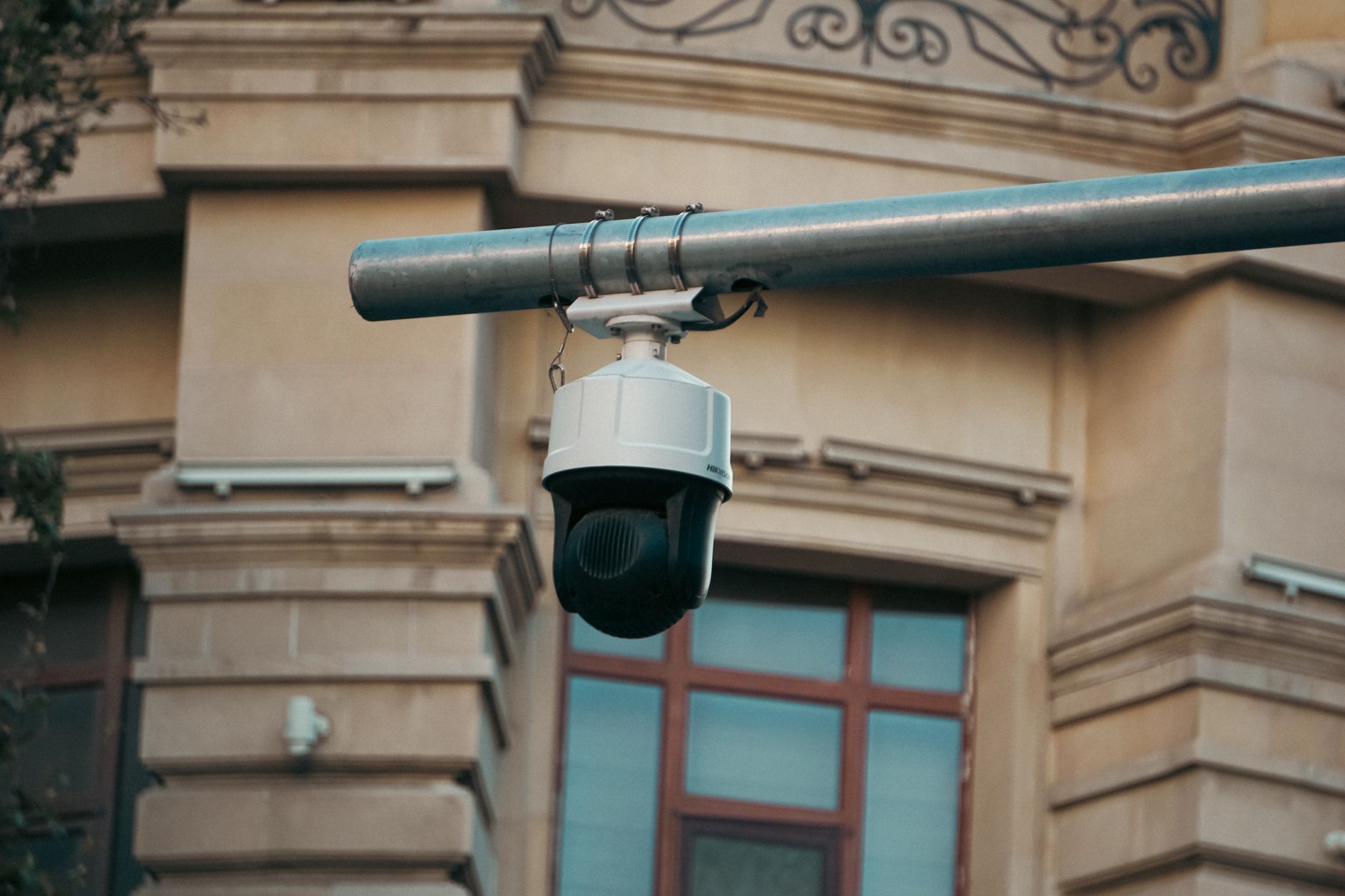
The headline going around today is that Apple’s 2027 home camera will “monitor the environment instead of the actual footage.” It’s a good line. It’s also the kind of line that collapses the moment you ask an engineer to draw the data-flow diagram.
So let me draw it. Because the interesting question isn’t whether Apple can build a camera that keeps video local — HomeKit Secure Video already does most of this — it’s what precisely the phrase no footage leaves the device is being asked to hide.
What does “monitor the environment, not the footage” actually mean?
Technically, it means the neural network never gets to send you frames. It sends you conclusions. A model runs over the video stream on-device, classifies what it sees — person, package, vehicle, familiar face, glass-break — and emits a structured event: a label, a timestamp, a confidence score, maybe a bounding box and a low-res thumbnail. The pixels stay put. The meaning extracted from the pixels is what travels.
That’s a real architectural distinction, and it’s the right one. Raw video is the toxic asset. An event log saying “person detected, 14:03, high confidence” is far cheaper to protect, cheaper to transmit, and far less catastrophic if a server is breached. Move the inference to the edge and the sensitive data simply never accumulates in a place you’d have to defend.
So what actually leaves the device?
Here’s where I stop trusting the slogan. I ran HomeKit Secure Video across three cameras for a week and watched the traffic, and “nothing leaves” is not what happens. What leaves is:
- Event metadata — the classifications and timestamps that drive your notifications.
- Notification payloads — often with a thumbnail, because a text-only “something happened” alert is useless.
- The clips themselves, when a trigger fires. Apple’s own Platform Security documentation is explicit here: recorded clips are analyzed, encrypted, and uploaded to iCloud end-to-end encrypted — keyed so that even Apple can’t read them, but they do leave for iCloud so you can scrub them later (Apple Platform Security, “HomeKit Secure Video security”).
The same documentation, along with Apple’s setup guide (“Set up security cameras with HomeKit Secure Video”), spells out the current topology: HomeKit Secure Video requires a home hub — an Apple TV or HomePod — and it is the hub, not the camera, that analyzes each frame before encrypting and uploading. That’s the architectural detail traffic-watching alone won’t tell you, and it’s the piece a 2027 camera would rewrite. Doing inference on the camera’s own SoC moves the neural work to the sensor, which is a genuine shift: it removes the hub as a dependency and shrinks the window where decrypted video exists on the network at all. But footage still leaves the device the second you want to review an event. The honest claim is not “no footage leaves.” It’s “footage only leaves when an event you asked about triggers it, and it leaves end-to-end encrypted.” The AI is a gate on egress, not a replacement for storage. Anyone selling it as the latter is selling you a slogan.
Where does the Secure Enclave earn its keep?
This is the part enterprise readers should actually care about. If inference moves onto a camera you can physically hold, the threat model changes: an attacker with the hardware can try to extract the model, tamper with it, or feed it spoofed input to suppress a detection. The Neural Engine does the fast math; the Secure Enclave is what makes the fast math trustworthy.
Expect the familiar pattern extended to a sensor: signed, integrity-checked model weights that won’t load if altered; inference keys bound to the Enclave so a lifted flash chip yields ciphertext; and attestation — the device proving to Apple’s service that it’s running genuine, unmodified firmware and models before its events are trusted. That last piece is the real preview. On-device ML attestation is the primitive that lets you believe a conclusion from hardware you don’t control. It’s the same problem passkey attestation solves for credentials, pointed at a model instead of a key.
Does this change anything for MDM and managed fleets?
Directly, no — a consumer home camera won’t land in Apple Business Manager. But the template is the point. An attested edge-inference pipeline that emits signed events instead of raw sensor data is exactly what you’d want for workplace monitoring that survives a works-council review. If WWDC 2026 ships developer surface for this — attested on-device classification with verifiable provenance — that’s the thing to read the release notes for, not the camera.
The verdict: “no footage leaves the device” is marketing. “Video is inert until an event you defined makes a signed, attested copy leave under your key” is the architecture. Judge the 2027 product on the second sentence, because that’s the one that either holds up or doesn’t.