The pager went off at 02:14 because the retail cluster in the Ohio distribution center couldn’t schedule pods. Not a big cluster — three nodes bolted to a rack next to the label printers — but it ran the app that told the pick-and-pack line what to do. When it stopped scheduling, the warehouse stopped.
The root cause, once we’d stopped bleeding, was depressingly familiar. Someone had upgraded that cluster’s control plane to a Kubernetes minor version six months ahead of the fleet, an admission controller webhook had a cert that expired, and the API server was quietly rejecting every pod create. There was no drift dashboard because there was no fleet — there were nineteen independent clusters in nineteen sites, each a lovingly hand-raised snowflake, each with its own etcd, its own upgrade cadence, and its own way of failing.
That was the old model of hybrid Kubernetes. You wanted compute on-prem — for latency, for data residency, because the machines that talk to a PLC don’t get to phone home to Azure — so you ran a whole cluster on-prem. Control plane and all. And a full control plane on the edge means etcd on the edge, certificate rotation on the edge, and a 2 a.m. incident that belongs entirely to you.
Flex Nodes, which Microsoft released to public preview on September 22, are Microsoft’s bet that you never wanted to run that control plane in the first place.
What actually changed
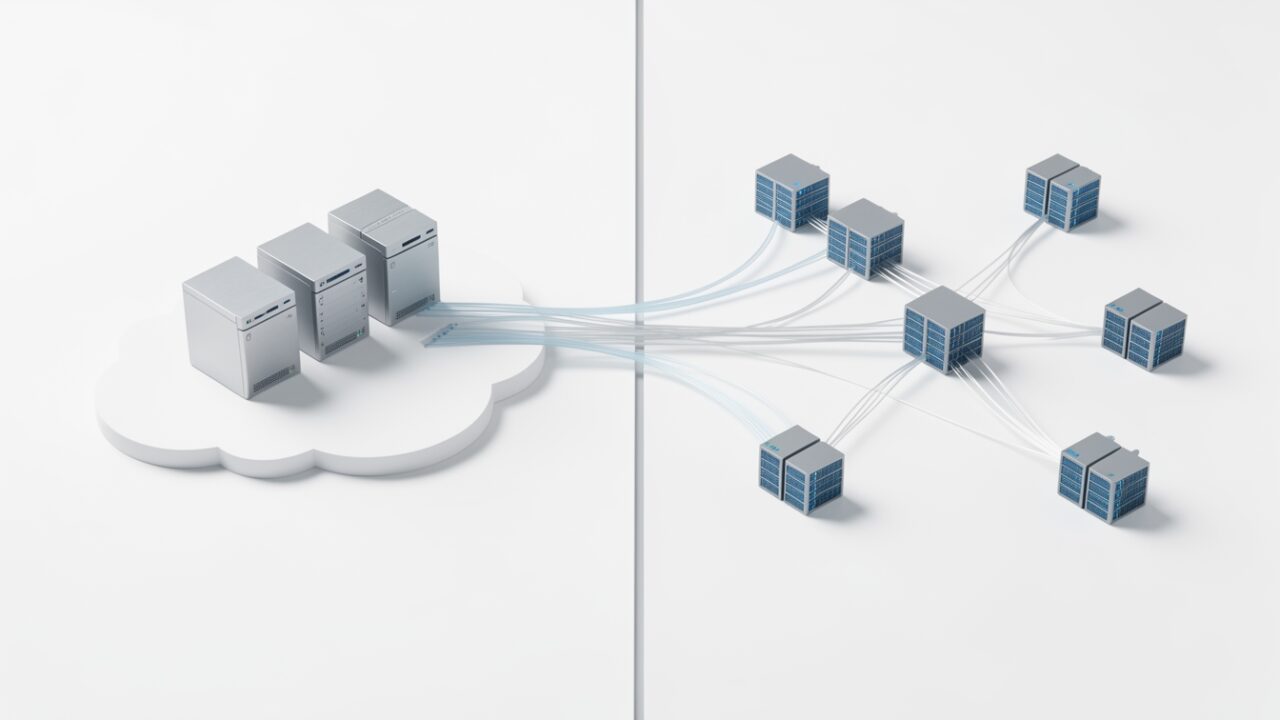
The pitch is simple enough that it took me a second to believe it. The AKS control plane — API server, scheduler, etcd, the managed bits you already pay Microsoft to babysit — stays in Azure. The worker nodes run on your hardware, in your data center or at your edge site, and connect back to that Azure-hosted control plane as if they were regular AKS nodes. One cluster object in Azure. Nodes wherever your compute physically lives.
So the topology inverts. Under the old Arc-enabled Kubernetes story you brought your own full cluster and projected it into Azure for management. Under Flex Nodes the control plane is genuinely Microsoft’s, running in the region you picked, and the data plane is genuinely yours, running on iron you own. The workloads schedule onto nodes that never leave the building. The etcd you no longer lose sleep over lives in Azure.
For a fleet of nineteen snowflakes, that’s the difference between nineteen upgrade windows and one. It’s the difference between nineteen sets of control-plane certs and zero that you personally rotate. If you’ve spent a decade watching on-prem Kubernetes rot at the edges, that’s not a feature — that’s a night’s sleep.
The Arc dependency, and why it matters more than the marketing says
Flex Nodes ride on Azure Arc. The on-prem machines have to be Arc-connected before they can join the Azure control plane — Arc is the plumbing that gives each node an identity in Azure, a management channel, and a place to hang policy and Defender. This is not optional and it’s not incidental. Arc is the trust fabric here.
The connectivity model is the part I’d make you read twice before you deploy anything. Arc-connected infrastructure works on outbound, agent-initiated HTTPS on 443. Your nodes reach out to Azure; Azure does not reach in. There are no inbound firewall holes to punch, no public IP on your warehouse rack, no NAT rule that some auditor finds in eighteen months and asks you to explain. The control plane talks to your kubelets over a tunnel that your side established. That’s the right design, and it’s the same pattern Arc’s cluster-connect has used for years.
What that also means: this is a hard dependency on a live link to Azure. Sever the connection and your on-prem nodes keep running whatever pods are already scheduled — the kubelet doesn’t forget its job — but you lose the ability to schedule, scale, or heal from the control plane, because the control plane isn’t in the building. For an edge site with a flaky WAN, model that failure explicitly before you commit. “The nodes keep serving traffic during a link outage but you can’t change anything” is a very different operational contract from a self-contained cluster, and it’s the sort of nuance that doesn’t make it into the launch blog.
Confirm the exact egress endpoints and ports against Microsoft’s Arc networking docs for your regions before you open anything on the firewall. Don’t take a list from a blog — including this one — as gospel for a production allow-list.
The setup path
Preview features live behind registration flags and preview CLI extensions, and the exact flag names and node-attach syntax will be in the preview docs — I’m not going to invent a flag name and have you paste it into a change ticket. The shape of it is Arc first, then attach. Validate before you create anything.
Get your on-prem host Arc-connected. Run the connectivity pre-check before the connect — it’s the single most useful command in the whole workflow and the one everyone skips:
And before you attach nodes or point workloads at a Flex-enabled cluster, look before you leap. Inspect the cluster, don’t mutate it:
If you’re doing this properly it belongs in Bicep or Terraform behind a plan / what-if gate, not in an interactive shell at the edge site. The whole point of one control plane is one source of truth.
The sovereignty story, told honestly
This is where I get twitchy, because “digital sovereignty” is doing a lot of load-bearing work in the launch copy. Here’s the accurate version: your workload data and your compute stay on-prem. Pods run on your nodes, in your building, on your storage. For data-residency requirements that are about where records physically live and execute, that’s real and useful.
But the control plane runs in Azure. That means cluster metadata, object definitions, secrets stored in etcd, scheduling decisions, and the audit surface of the API server all live in a Microsoft region. If your compliance regime cares about where the orchestration state resides — and some genuinely do — Flex Nodes does not put etcd in your data center. It puts your nodes there and leaves the brain in Azure. Don’t let anyone sell you full sovereignty on this architecture. It’s data-plane locality with a cloud control plane, which is a good and honest thing to be, and a different thing from what the word “sovereignty” implies.
The upside for a platform-security team is genuine, though. One control plane in Azure means Azure RBAC governs cluster access uniformly, Azure Policy for Kubernetes can enforce guardrails across every site from one initiative, and Defender for Containers can watch nodes that used to be dark. Nineteen snowflakes with nineteen access models becomes one policy plane. That’s the security win that actually justifies the migration.
The part the preview banner is telling you
It says preview, so believe it. Assume feature gaps, assume breaking changes between now and GA, and assume the region and SKU list is short — confirm both against the update page and the roadmap rather than my word. Preview means don’t run your pick-and-pack line on it in December. It means stand up a lab site, break it on purpose, and learn where the WAN-outage behavior actually lands before it’s your problem at 02:14.
What I’d carry out of the Ohio incident and into this preview:
- The control plane you don’t run can’t page you. Moving etcd and cert rotation to Azure removes an entire category of on-prem failure. That’s the real prize — not edge buzzwords.
- Model the disconnected state first. Nodes keep serving what’s scheduled; you lose scheduling, scaling, and healing during a link outage. If your site’s WAN is flaky, that contract has to be acceptable before you deploy, not discovered during an incident.
- The Arc tunnel is a new trust path — treat it like one. A persistent outbound channel that grants an Azure control plane authority over your on-prem compute deserves the same scrutiny as any privileged link: scope the node identities, watch the Arc agent, and put Defender on it.
- “Sovereignty” here means data locality, not control-plane locality. Your workloads stay home; your cluster metadata and secrets live in Azure. Write that down in the compliance doc in plain language before someone else writes it wrong.
- One control plane is the security dividend. Unified RBAC, one Policy initiative, one Defender surface across every site. That’s worth more than the edge story, and it’s the reason to actually do this.
- It’s preview. Run the troubleshoot command, gate everything through IaC, and don’t put the warehouse on it yet.
Nineteen clusters, nineteen upgrade windows, nineteen ways to wake me up. If Flex Nodes gets to GA in the shape it’s in now, that becomes one cluster and one very good night’s sleep — as long as the WAN holds and you read the fine print about where the brain lives.