Apple revised the App Review Guidelines again, touching the Before You Submit preamble and tightening the language in section 1.2. If your day job is pushing apps to a fleet of managed iPhones, you can almost close this tab. Almost. There’s one path where this still reaches you, and most people get the boundary wrong.
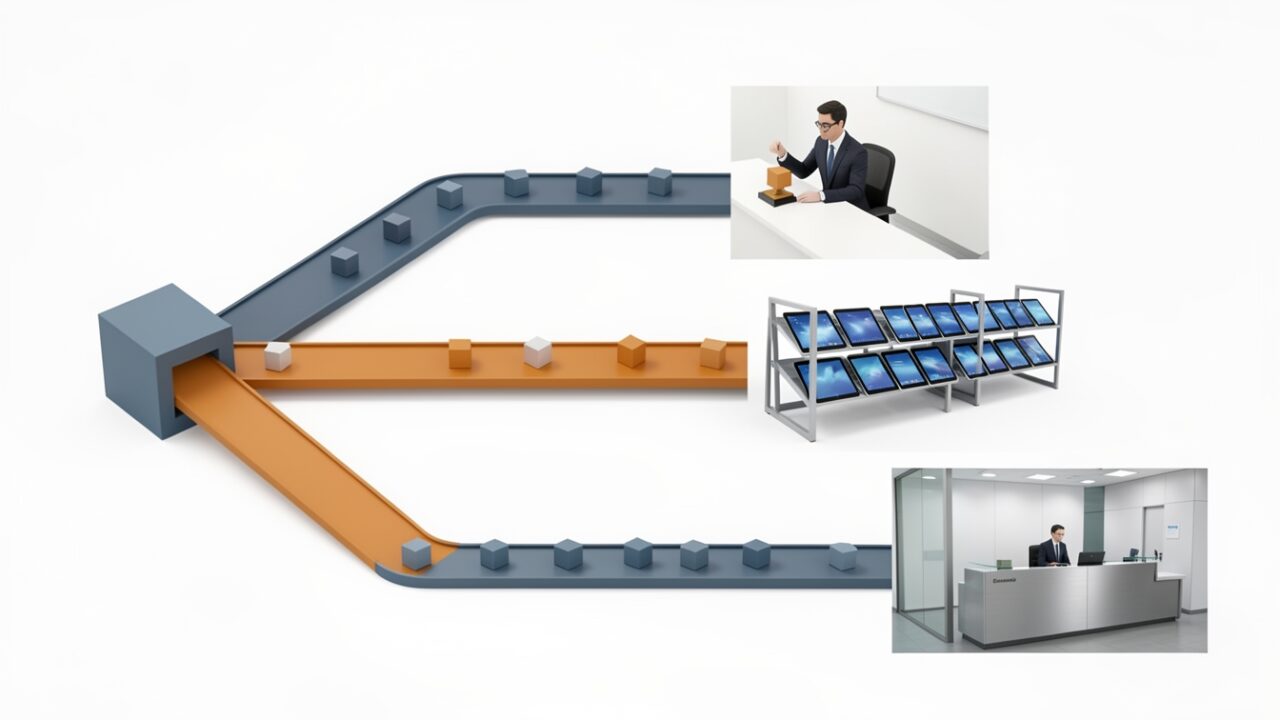
Think of App Review as customs. Every app that wants to enter the public App Store queues at the same desk, opens its bags, and gets waved through or sent back. The App Review Guidelines are the posted rules at that desk. They change constantly, a word here, a clarifying link there, and this diff lands squarely in the content-policy aisle, not the code-signing one.
The desk: what actually changed
Two things moved. The Before You Submit introduction got its resource links refreshed, the “read these first” signage at the front of the queue. And section 1.2, User-Generated Content, got clarified. Apple’s developer news post flags the change but doesn’t publish a redline, so for the exact before/after you have to read the live text.
Here’s what that text requires, and has for years. Section 1.2 of the guidelines governs any app where users post things other users see: forums, chat, comments, media uploads. The bar has four pillars, and this revision sharpens the wording rather than inventing new obligations. If you ship UGC, Apple expects:
- a method for filtering objectionable material from being posted;
- a mechanism for users to flag offensive content, with a timely response, not a black hole;
- the ability to block abusive users from the service; and
- published contact information so people can reach you.
Nothing here is a plot twist. It’s Apple restating, in firmer prose, that “we’ll add moderation later” is not a shipping plan. Check your paraphrase against the actual clause before you rely on it, mine is a summary, not the statute.
Why your MDM workflow didn’t flinch
Here’s the part worth the ninety seconds. The guidelines govern who gets through customs. Enterprise distribution mostly doesn’t go through customs at all.
If you distribute in-house apps through the Apple Developer Enterprise Program, signed with your enterprise certificate, pushed by MDM to your own employees, those apps never see App Review. They’re governed by the Enterprise Program license agreement, not these guidelines. A clarification to section 1.2 has exactly zero bearing on that .ipa you’re staging in Jamf or Intune.
Same story on macOS. Notarization gets conflated with App Review constantly, and it shouldn’t be. Notarization is an automated malware scan on Developer ID–signed software, a bag X-ray, not an interview. It checks for known-bad code and a valid signature, then staples a ticket. It does not read your content policy. These guideline edits leave your notarization pipeline, your entitlements, your sandbox profile, and your provisioning untouched. Those live in a different building entirely.
The one path that does stay in scope: Custom Apps distributed through Apple Business Manager. Private as they are, custom apps still clear App Review before they land in your ABM content catalog. So if your custom app has a comment field, a chat tab, or any user-to-user posting, the UGC bar applies to you exactly as it does to a public release. That’s the trap, “it’s private, so the rules don’t” is wrong for the ABM custom-app route.
In-house via the Enterprise Program: no review, guidelines don’t apply. Custom apps via ABM: full review, guidelines apply. Notarization: separate scan, unaffected.
What to do with the five minutes this bought you
Pull up the updated text yourself: developer.apple.com/app-store/review/guidelines, with the change note at the developer news post. If you own any custom app with social features, map it against the four 1.2 pillars now, because a rejected custom app stalls a managed rollout just as hard as a public one, only with fewer people watching the queue.
And mark the next beat on the calendar. The small clarifications arrive year-round; the big structural rewrite reliably lands alongside WWDC each June. This pass was a sign repaint at the customs desk. The remodel comes in summer.