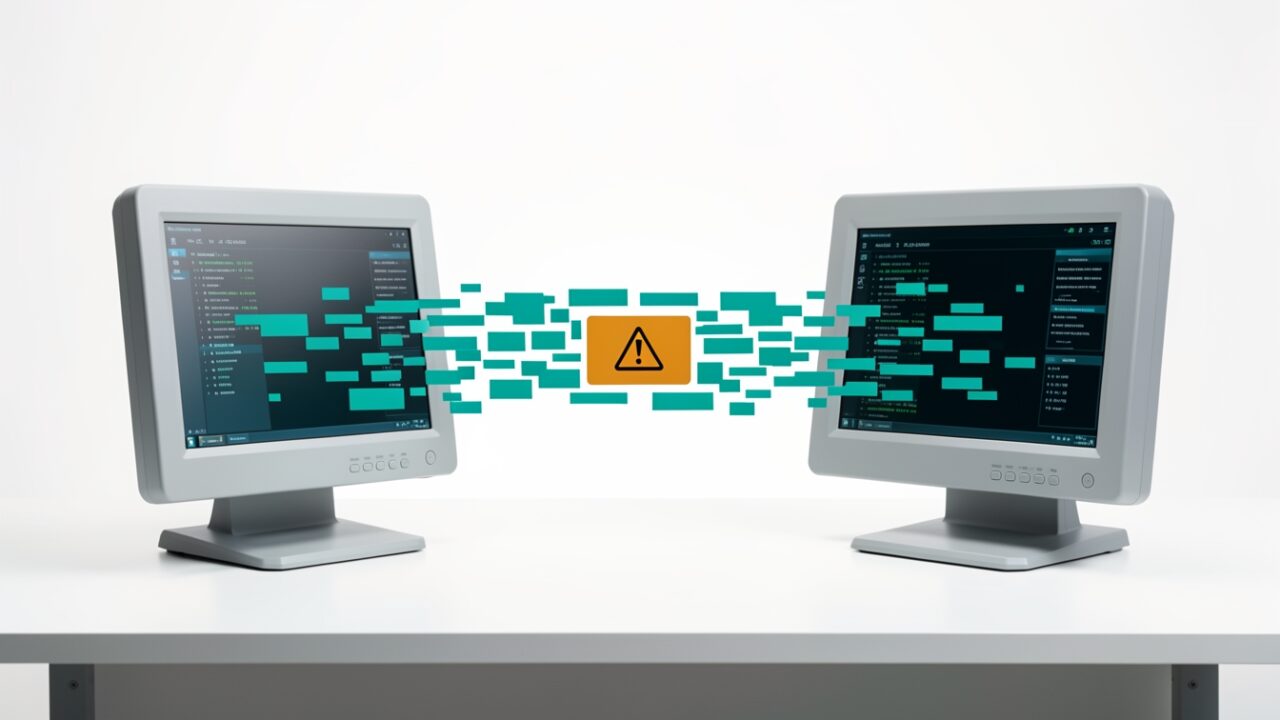
A structural flaw in the Model Context Protocol means tool output arrives with the same authority as your instructions—and propagates across agent chains.
The 2 a.m. version of this problem looks like an agent that transferred data nobody asked it to transfer, citing an instruction nobody wrote. You grep the prompts. Clean. You grep your orchestration code. Clean. The instruction came from a tool result — a string a server returned, that your model read and obeyed as if it were gospel from you.
That’s the whole story of the MCP trust gap, and Ars Technica’s writeup of a structural flaw in agents from Google and others puts a name to something plenty of us have been quietly nervous about. Here’s the blunt version: in the Model Context Protocol, the text a server sends back lands in the model’s context with the same authority as your own instructions. One compromised server can inject commands that propagate to every agent that consumes its output.
MCP is the open standard for wiring models to tools and data. Servers advertise tools; clients (your agent) call them and feed the results back into the context window. It’s genuinely useful, which is why Google and a growing slice of the agent ecosystem speak it. In a multi-agent setup, one agent’s output becomes another agent’s input. That handoff is where the poison travels.
Where the instruction smuggles itself in
Two surfaces carry this class of attack. Both follow patterns familiar from prompt-injection research, and the snippets below are illustrative — constructed to show the shape, not copied from a live exploit. First, the tool description: metadata the model reads before it ever makes a call.
Second, the tool result — the data coming back from a call you did authorise:
Your model has no reliable way to tell “data I fetched” from “orders I was given.” Both arrive as text. Hand that text to a second agent in a chain and it inherits the instruction with none of the context that might have made the first agent suspicious. That’s the lateral spread the Ars report is pointing at.
Is this a bug or the design? Per the reporting, it’s structural. The protocol has no trust boundary between content and command — nothing marks server output as untrusted data the model must not act on. Implementations differ only in how wide they leave the door. So no, you don’t patch this with a version bump.
Authentication vs. isolation, judged on what actually stops the spread
Round one — can it stop a compromised server? Server authentication verifies who you’re talking to. Signed, pinned, OAuth’d, lovely. It does exactly nothing when the authenticated server is the problem — compromised, or faithfully relaying poisoned upstream data. Isolation treats all tool output as hostile input regardless of who sent it. Isolation wins. 1–0.
Round two — stopping lateral propagation. Auth doesn’t travel with the payload; once the string is in context, provenance is gone. Isolation — quarantining tool output, stripping or neutralising instruction-shaped text, never passing raw results straight into another agent’s instruction channel — is the only thing that survives the handoff. Isolation again. 2–0.
Round three — operational cost. Here auth scores. Pinning servers and scoping tokens is a config change. Real isolation means separate contexts, output validation, and allow-lists on what any agent can do with what it read. It’s work. 2–1.
Verdict: isolation takes it. Authentication is table stakes — do it anyway, because it shrinks who can feed you garbage — but it is not a defence against this flaw, and any vendor implying otherwise is selling you a lock for a door that opens inward.
The one case I’d lean on auth first: a closed system where you control every server and the threat is a rogue third party joining the mesh, not your own servers turning. Rare. Most agent fleets aren’t that tidy.
Treat every byte a server returns as something a stranger shouted through the window. Your agents already do the opposite. That’s the bug you own.