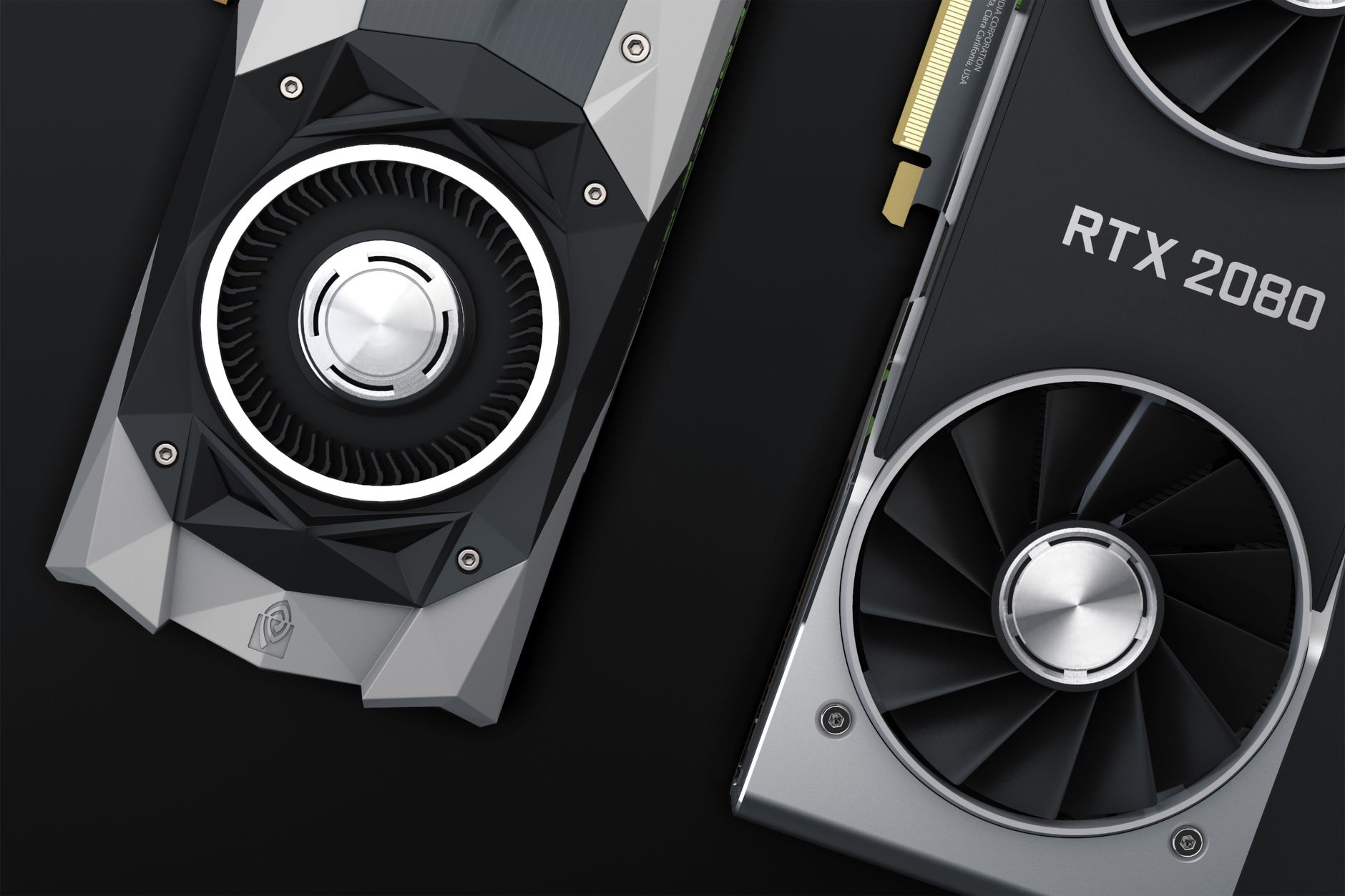
The headline writes itself: frontier GPUs land in the air-gapped clouds, classified AI gets a rocket strapped to it. Microsoft’s Azure Government post says the H200 Tensor Core GPU is now available in the Secret and Top Secret isolated cloud environments. True. Also mostly beside the point.
The load-bearing claim in every version of this story is that the GPU is what was holding classified AI back. It wasn’t. In these environments the accelerator is the one component that behaves predictably. Everything wrapped around it, accreditation boundaries, sponsorship, quota, the operational tax of running a cloud with no internet, is where programs actually stall. Let me pressure-test the claim by asking what the H200 genuinely changes, and then what it very much does not.
Does the H200 actually enable something the H100 couldn’t?
Yes, and it’s narrower than the marketing implies. The H200’s headline spec is memory: 141 GB of HBM3e per GPU at roughly 4.8 TB/s, against the H100’s 80 GB of HBM3 at about 3.35 TB/s. Same Hopper compute architecture, same FLOPS profile. What changed is how much model you can hold and how fast you can feed it.
That single difference is the whole story for large-model inference. Here’s the math a capacity planner in one of these enclaves actually runs:
On H100 you were forced into INT8/FP8 quantization or a multi-node tensor-parallel deployment stitched over InfiniBand, more failure domains, more latency, more things to accredit. On H200 the same model lands on one node with room for a real KV cache, which is what long-context serving lives and dies on. For training and fine-tuning, the bigger HBM means fewer gradient-checkpointing gymnastics and larger microbatches. That’s genuine. It’s also incremental Hopper, not a generational leap over H100 the way H100 was over the A100’s 80 GB HBM2e.
So the honest version: the H200 lets you run bigger models with fewer moving parts inside a boundary where every extra moving part is expensive to certify. That’s worth something. It is not a new capability class.
Which SKU, and can you even get it?
In commercial and standard Azure Government, the eight-way H200 lands in the ND H200 v5 family, eight GPUs, NVLink-connected, InfiniBand between nodes for scale-out. Assume the Secret and Top Secret offering tracks the same VM series and topology; assume nothing about the specifics until you read your region’s SKU list from inside the enclave. Feeds and speeds published for the public cloud are a starting hypothesis in a sovereign region, not a spec sheet.
Which brings up the first thing a faster GPU doesn’t fix: quota. GPU capacity in the classified regions is scarce, allocated deliberately, and gated behind your sponsoring agency and contract, not a self-service slider. You do not spin up an eight-GPU node because you feel like it. The check itself runs inside the accredited environment, against that cloud’s own endpoint, not from your laptop over the public CLI:
If that returns nothing, the GPU generation is academic. Capacity requests here move at the speed of contracting officers, not API calls.
What does “certified for classified” actually cover?
This is where the brief’s own shorthand needs correcting, because the mapping matters. The DoD Impact Level scale tops out at IL6, which covers information classified up to Secret. Azure Government Secret is built and accredited to that ceiling, IL6, plus the intelligence-community framework (ICD 503 / JSIG) that classified systems are assessed under. Top Secret sits above the published IL framework entirely; it isn’t “IL7,” it’s accredited under the higher-side authorization regime for that data. So if you see a slide claiming “IL5 for Secret, IL6 for Top Secret,” someone flattened the model. IL5 is controlled unclassified and unclassified national-security systems. It does not touch Secret data.
Why does a hardware announcement care? Because the second thing a faster GPU doesn’t fix is your authorization boundary. Dropping H200 nodes into an accredited region does not automatically place your workload, your model weights, or your data pipeline inside that authorization. The platform’s ATO covers the platform. Your system needs its own ATO, and the moment you introduce a new model, a new data flow, or an inference endpoint, you’re back in front of an authorizing official. The GPU changing under the hood is the least of what they’ll ask about.
What breaks the illusion that this is “just Azure, but secret”?
The air-gap. These are physically isolated, sovereign clouds, no internet egress, dedicated hardware, US-person operations. That’s the point, and it’s also the third thing raw GPU speed can’t touch: the supply chain for everything the GPU consumes.
In commercial Azure you pip install, pull a base model from a hub, grab the latest CUDA container, and move on. None of that exists here. There is no reaching out to Hugging Face, no NGC pull, no apt update against a public mirror. Every driver, every CUDA toolkit version, every framework wheel, and every model weight has to arrive through an approved transfer process and clear review before it touches the enclave. Model provenance becomes a compliance artifact, not a convenience. The H200 can serve a 405B model beautifully, after someone has physically shepherded 810 GB of vetted weights across the boundary and documented where each byte came from.
Support looks different too. You don’t open a ticket with a screenshot; incident handling runs through cleared personnel and channels appropriate to the classification. Debugging a driver regression is slower when the person who can see your logs needs a clearance and the logs can’t leave the room.
The verdict
The precise version of the claim: the H200 removes a specific, real bottleneck, fitting large models in memory without sharding or aggressive quantization, inside environments where reducing moving parts has outsized value. For teams already accredited, already holding quota, and already running the transfer discipline for weights and dependencies, this is a clean upgrade that makes single-node large-model serving practical. Good news, genuinely.
For everyone treating GPU availability as the thing standing between them and classified AI: the silicon was never your constraint. Sponsorship, ATO scope, quota allocation, and the sheer friction of a zero-internet supply chain were, and a faster accelerator doesn’t touch any of them. The H200 is the fast part of a slow system. Plan for the slow part.