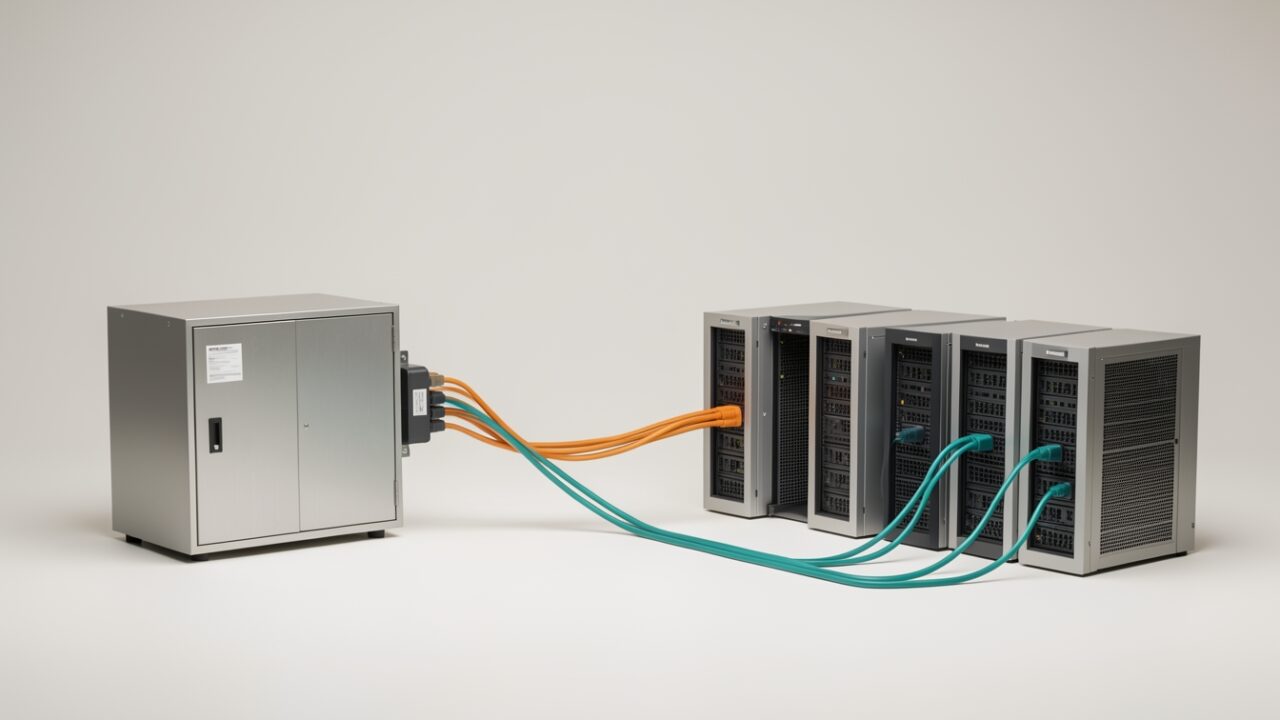
Picture the on-call engineer staring at a wall of CreateContainerConfigError. Twenty-odd pods across three Arc-connected clusters, all wedged on the same thing: a secrets volume that won’t mount. The app logs say the mount path is empty. The Key Vault audit log says nobody’s asked for the secret in hours. Nothing was deployed. Nobody touched RBAC. The cluster just quietly stopped being able to pull its secrets, and now the payment service can’t find its database password.
This outage hasn’t happened yet. It’s scheduled. The date is October 9, 2027, and the trigger is a retirement notice most people skimmed and filed under “next year’s problem.”
What’s actually being switched off
Microsoft is retiring the Azure Key Vault Secrets Provider extension for Azure Arc-enabled Kubernetes. Its replacement is the Azure Key Vault Secret Store extension (SSE). After the cutoff, the old extension stops being supported, which, for a thing whose entire job is handing live credentials to your workloads, is not a state you want to discover empirically. The date and the direction of travel come straight from the Azure Updates retirement notice.
One scoping point first, because it trips people up: this is the Arc extension. If you run AKS and use the Key Vault provider add-on there, that’s a different code path on a different lifecycle. Don’t panic-migrate your AKS fleet because of an Arc notice. Check where your clusters actually live before you do anything.
The analogy that makes the breaking change obvious
The reason this isn’t a drop-in swap comes down to how each extension gets a secret into a pod, and they do it in genuinely different ways.
The old Secrets Provider extension is built on the Secrets Store CSI Driver with the Azure Key Vault provider, that’s the architecture Microsoft documents in Use the Azure Key Vault Secrets Provider extension to fetch secrets into Azure Arc-enabled Kubernetes clusters. Think of it as a courier who walks the envelope directly into the room, hands it to the pod as a mounted file, and takes it back the moment the pod leaves. The CSI driver mounts the secret into the pod’s filesystem via tmpfs, as the driver’s own docs describe. It’s never a first-class Kubernetes object unless you explicitly ask it to sync one. When the pod dies, the mount is gone.
The Secret Store extension is built on the Secrets Store Sync Controller, a Kubernetes SIG project. Different model entirely. Instead of handing the envelope into the room, the controller’s entire purpose is to materialise a native Kubernetes Secret object from your external store and keep it in step, that’s the one-line description in the project’s own overview. Your workloads then read that Secret the normal way: as an env var or a mounted secret volume. Microsoft’s own extension guidance for Arc, Use the Secret Store extension to fetch and sync secrets, documents this sync-to-native-Secret behaviour.
That difference is the whole story. A courier-to-the-room model and a shared-mailbox model have different security properties, different RBAC, and, critically, different manifests. Any workload today that mounts a csi volume with driver: secrets-store.csi.k8s.io is wired to the courier. Point it at the mailbox and it finds nothing. The volume stanza itself has to change.
It also means you inherit the usual trade-off of native Secret objects: anything with get on secrets in that namespace can read them, and they land in etcd. That’s not worse, exactly, it’s different, and it’s the kind of difference your security reviewers will have opinions about. Plan for it, don’t discover it.
Step one is finding out how bad it is
You can’t scope a migration you can’t count. The old extension registers with the extension type Microsoft.AzureKeyVaultSecretsProvider, that’s the string Microsoft uses in its own install and verification examples in the Secrets Provider tutorial, so Azure Resource Graph will give you the whole estate across every subscription in one query, no cluster-hopping required.
If the kubernetesconfigurationresources table isn’t recognised, add the Resource Graph extension with az extension add --name resource-graph first. Export the result. That list is your migration backlog and, if you miss the deadline, your incident bridge roster.
The count from that query is the honest answer to “how big is this?”, far more useful than the number of clusters you think use Key Vault.
Install the new extension alongside the old one, never instead of it
The single most important sequencing rule: do not uninstall the Secrets Provider extension until the Secret Store extension is installed, configured, and proven on the same cluster. They can coexist. Use that. The cost of a few weeks of overlap is a rounding error; the cost of a gap is the outage I opened with.
Then wire up identity. This is the step people assume is free and it isn’t: the old extension’s managed identity and its Key Vault access policy / RBAC assignments do not carry over to the new one. You configure the Secret Store extension’s identity and grant it vault access as a fresh setup, exactly as the Secret Store extension doc walks through. If you’re on Azure RBAC for the vault, that doc specifies the extension’s identity needs the built-in Key Vault Secrets User role, the same role defined in Provide access to Key Vault keys, certificates, and secrets with Azure RBAC, scoped to the specific vault (or tighter, to individual secrets, if you’ve gone that far). Verify with -WhatIf before you commit:
Rewrite the manifests, don’t copy them
This is where feature parity quietly isn’t. The SecretProviderClass you have today describes a CSI volume. The Secret Store model, per its extension doc, expects you to describe which Key Vault objects to pull and lets the sync controller materialise a Kubernetes Secret from them, which your pod then consumes conventionally. Confirm the exact CRD schema and field names against that doc, the shapes differ between the two extensions, and guessing at YAML is how you turn a planned migration into an unplanned one.
The migration-day change in your pod spec is the tell. You’re moving from this shape:
…to consuming a native Secret that the sync controller keeps current, envFrom a secretRef, or a standard secret-backed volume. Same password, completely different plumbing.
Prove rotation before you trust it
Rotation is the part people forget to test, because the happy path looks identical whether or not rotation works. Change a secret value in Key Vault, then watch the Kubernetes Secret actually update within the controller’s sync interval:
And here’s the bite that lands six months later. Once the controller has updated that Kubernetes Secret, how your pod sees the change depends entirely on how it consumes it, and this is a Kubernetes behaviour, not an Azure one. The Kubernetes Secrets documentation is explicit: a Secret consumed as a mounted volume is eventually updated in the running pod, but environment variables are not updated after the Secret changes, the container keeps the old value until it restarts, because env vars are resolved once at process start. If your app assumes rotation is picked up live and you’ve wired it with envFrom, that assumption dies silently. Decide now whether you need mounted-file consumption or a restart strategy. Find this in a test cluster, not in production three days after an emergency credential rotation.
So, the lessons, pulled out plainly:
- This is an Arc retirement, not an AKS one. Scope with Resource Graph before you touch anything, so you migrate the right clusters and leave the rest alone.
- The architecture changed, not just the name. A Secrets Store CSI Driver mount (secret in
tmpfs) becomes a native KubernetesSecretsynced by the Secrets Store Sync Controller. Different security posture, different RBAC, different manifests. - Install the new extension before removing the old one. They coexist. A validation overlap is cheap; a coverage gap is an outage.
- Identity doesn’t carry over. Grant the Secret Store extension’s identity explicit Key Vault access, Key Vault Secrets User under Azure RBAC, and verify with
-WhatIf. - Test rotation, and specifically test env-var consumers. Per Kubernetes’ own docs, a Secret read as an environment variable won’t pick up a rotation without a restart.
- Do it in 2026. You have twelve months and roughly none of them should be spent in the final week of September 2027.
The retirement notice isn’t the event. The event is the morning a pod can’t find its password and the extension that used to fetch it is gone. You get to choose whether that morning is a scheduled change window or a page.
Sources
- Azure Updates, retirement of the Azure Key Vault Secrets Provider extension for Arc-enabled Kubernetes (retirement date October 9, 2027)
- Microsoft Learn, Use the Azure Key Vault Secrets Provider extension to fetch secrets into Azure Arc-enabled Kubernetes clusters (extension type
Microsoft.AzureKeyVaultSecretsProvider; CSI-driver-based architecture) - Microsoft Learn, Use the Secret Store extension to fetch and sync secrets on Azure Arc-enabled Kubernetes clusters (native Kubernetes
Secretsync, identity/RBAC setup, CRD schema, install command) - Secrets Store CSI Driver, project documentation (tmpfs volume mount model)
- Secrets Store Sync Controller, Kubernetes SIG project (sync-to-native-Secret model underlying the Secret Store extension)
- Microsoft Learn, Provide access to Key Vault keys, certificates, and secrets with Azure RBAC (Key Vault Secrets User built-in role)
- Kubernetes documentation, Secrets (mounted volumes update in-place; environment variables are not updated after the Secret changes)
One honest caveat: the exact --extension-type string for the Secret Store extension install should be re-checked against the current Microsoft install doc before you script it across a fleet, it’s the one identifier most likely to drift.